

At the World Congress of Anaesthesiologists (WCA) 2026, HEYER Medical was proud to participate in one of the world’s most influential academic gatherings in anesthesiology and perioperative medicine. Among the many outstanding scientific exchanges during the congress, one session stood out for its exceptional energy, clinical relevance, and audience engagement.
Representing HEYER Medical, Dr. Anass Mounir delivered a remarkable lecture titled:
What began as a scientific presentation quickly evolved into one of the most engaging and thought-provoking discussions of the event.
From the very first minutes, Dr. Anass established a strong connection with the audience through his vivid storytelling, natural humor, and highly immersive presentation style. Rather than relying solely on slides and data, he transformed complex respiratory physiology into practical clinical scenarios that every anesthesiologist could immediately relate to.
The lecture hall remained fully engaged throughout the session. Attendees listened attentively, frequently responding with visible agreement as Dr. Anass addressed the realities and challenges faced daily in operating rooms and intensive care units around the world.
One statement in particular immediately captured the attention of the audience:
“We are ventilating something that was never designed to be mechanically ventilated.”
With this powerful introduction, Dr. Anass guided participants into a deeper discussion surrounding ventilator-induced lung injury (VILI), emphasizing that lung-protective ventilation should no longer be considered a strategy limited only to ARDS patients.
Instead, he highlighted an increasingly important modern perspective:
Every mechanically ventilated patient deserves individualized lung protection.
Throughout the session, Dr. Anass challenged several traditional assumptions surrounding mechanical ventilation.
Using clinically relevant examples, he demonstrated how even seemingly “safe” settings — such as low tidal volume ventilation — may still generate injury when factors like driving pressure, stress-strain relationships, mechanical power, and patient respiratory effort are not carefully monitored.
One of the most impactful moments came when he explained:
“Not all 6 ml/kg are equal.”
This simple statement resonated strongly with the audience because it reflected a reality increasingly recognized in modern perioperative medicine: protective ventilation is not defined by a single number, but by the interaction of multiple physiological variables unique to each patient.
Dr. Anass’s ability to simplify advanced concepts without losing scientific precision was particularly impressive. Topics such as:
were presented with clarity, confidence, and exceptional clinical practicality.
Rather than presenting ventilation as a rigid protocol, Dr. Anass repeatedly emphasized the concept of personalized ventilation — a philosophy that strongly aligned with the future direction of perioperative critical care.
Another memorable statement that sparked reflection among attendees was:
“There is no protective ventilation… there is only personalized ventilation.”
Beyond the academic content itself, what truly distinguished this session was Dr. Anass’s extraordinary stage presence and communication skills.
His lecture style was energetic yet composed, humorous yet deeply professional. He maintained continuous interaction with the audience, creating an atmosphere that encouraged participation rather than passive listening.
As the session progressed, more and more clinicians actively joined the discussion, raising questions regarding real-world ventilation strategies, intraoperative lung protection, obesity management, recruitment timing, and patient-triggered injury during assisted ventilation.
The Q&A session became one of the highlights of the lecture.
Dr. Anass answered every question with remarkable composure and confidence. Whether addressing highly technical physiological mechanisms or practical bedside decisions, his responses were precise, structured, and supported by extensive clinical knowledge and experience.
What impressed attendees most was not only the depth of his expertise, but also the calm and effortless manner in which he communicated it. His ability to respond thoughtfully under pressure reflected the qualities of a truly experienced international speaker and clinician.
The interaction between Dr. Anass and the audience created a rare atmosphere of genuine academic resonance — one in which participants were not simply receiving information, but actively reflecting on their own clinical practice.
At HEYER Medical, we believe that meaningful innovation in anesthesia goes beyond technology alone. True progress is achieved when advanced clinical understanding, physiological precision, and practical patient-centered care come together.
Dr. Anass’s lecture perfectly reflected this philosophy.
As modern anesthesia continues evolving toward increasingly individualized ventilation and monitoring strategies, the importance of intelligent clinical decision-making becomes greater than ever. Advanced anesthesia workstations today are expected not only to deliver ventilation, but also to provide clinicians with deeper insights into respiratory mechanics, compliance changes, driving pressure trends, and patient-ventilator interaction.
These discussions strongly align with HEYER Medical’s ongoing commitment to supporting safer, more precise, and more personalized anesthesia management in daily clinical practice.
Our participation at WCA 2026 represented more than the presentation of technology. It reflected our dedication to international academic collaboration and our commitment to supporting clinicians who are shaping the future of anesthesia care worldwide.
The session delivered by Dr. Anass Mounir was more than an academic lecture — it was a reminder that behind every ventilator setting is a patient whose physiology demands careful understanding and individualized protection.
We sincerely thank Dr. Anass for his outstanding contribution during WCA 2026 and for representing HEYER Medical with such professionalism, expertise, and passion.
His ability to combine scientific excellence with engaging communication left a lasting impression on colleagues from around the world and inspired meaningful discussion long after the session concluded.
As global anesthesia practice continues to evolve, HEYER Medical remains committed to supporting international experts, advancing clinical education, and contributing to a safer and more intelligent future for perioperative medicine.


At the World Congress of Anaesthesiologists (WCA) 2026, HEYER Medical was proud to participate in one of the world’s most influential academic gatherings in anesthesiology and perioperative medicine.
Learn more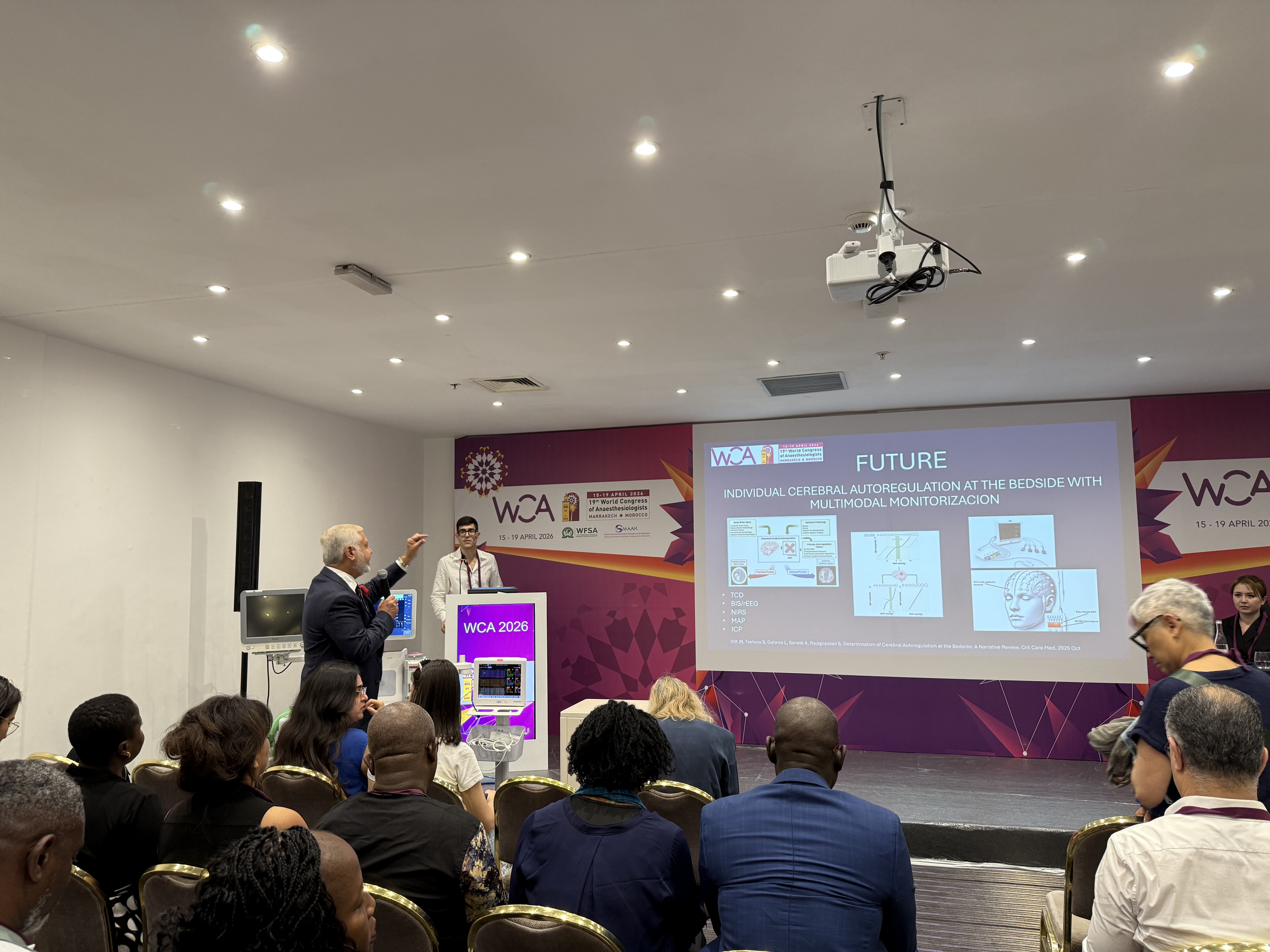
Dr. Francisco Jesús González Blanc’s Outstanding Academic Contribution
Learn more info@heyermedical.de
 +49 2603 7913
 Hagenower Str. 73, 19061 Schwerin, Deutschland
We use cookies to enhance your browsing experience, serve personalized ads or content and analyze our traffic. By clicking "Accept." you consent to our use of cookies.Further information may be found in our Privacy Policy.


